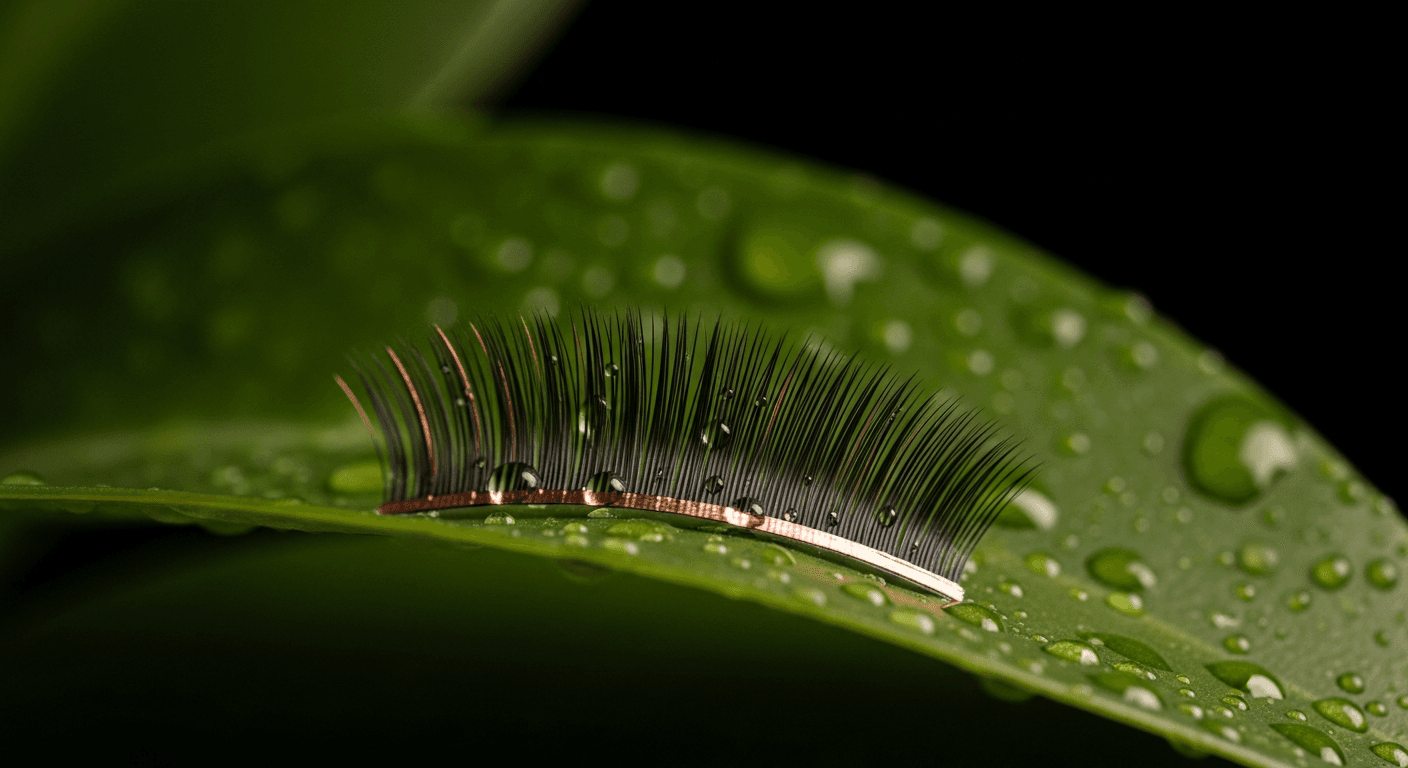
Pick up a lash extension — any extension labeled ‘silk,’ ‘faux mink,’ or ‘cashmere’ — and you’re holding the same petroleum-based plastic found in toothbrush bristles and keyboard keys. The material is polybutylene terephthalate, known in the industry as PBT, and it will never break down. Not in a year. Not in a century. Not ever.
This isn’t a fringe finding or an alarmist claim. According to Stacy Lash, PBT is the actual material in virtually every ‘faux mink’ and ‘silk’ extension on the market — the same engineering-grade thermoplastic used in automotive connectors and swimwear fibers. The names on the menu describe how the lash *looks*, not what it’s made of.
The conversation about sustainable lash extensions has been slow to reach the appointment chair. But it’s arriving — driven by plant-based alternatives, tightening Canadian plastics regulation, and a generation of beauty consumers who want to know what’s actually on their face. If you’ve been following the ‘forever chemicals’ hiding in mainstream mascara, the pattern will feel familiar: marketing language that obscures what’s really in the product. A closer look at how classic sets are applied makes the material question concrete.
The Plastic You’re Wearing on Your Eyes
PBT belongs to the polyester family of thermoplastics. It’s valued in manufacturing for the same reasons it works as a lash fiber: it holds its shape under heat, resists moisture, and can be tapered to a fine point that mimics a natural lash. It’s also cheap, lightweight, and easy to produce at industrial scale. That combination made it the default material for an entire industry — and nobody thought to question it because, frankly, it performs beautifully.
The problem isn’t performance. PBT creates a gorgeous curl, holds up through daily wear, and is safe for application near the eye. The problem is what happens after. Every fill appointment generates waste: removed extensions, adhesive residue, microfiber pads, disposable applicators. When the extensions themselves are non-biodegradable plastic, that waste joins a permanent layer in landfills.
Multiply that across a global lash extension market valued at $1.6 billion and growing at nearly 7% annually, and the scale becomes difficult to dismiss. Every set applied, every fill completed, every lash that falls into a sink drain — it’s all PBT, and none of it is going anywhere.
The Demand Shift That’s Already Measurable
Consumer preferences aren’t shifting someday. They shifted last year. NielsenIQ’s 2025 clean beauty report found that compostable beauty products grew 30.9% in dollar sales year-over-year — outpacing cruelty-free (+18.1%) and plastic-free (+12.2%) claims. It’s the fastest-growing sustainability attribute in beauty, and it isn’t close.
The demographic driving it is worth naming: 67.7% of Gen Z consumers now prioritize sustainability in beauty purchases, and clean beauty shoppers spend an average of $66 more per year than the category average. These aren’t niche customers. They’re becoming the market.
Canada’s regulatory trajectory reinforces the signal. The federal single-use plastics prohibition, upheld by the Federal Court of Appeal with an export ban effective December 2025, hasn’t reached lash extensions directly. But it has established a clear national direction on consumer plastics. And the new Canadian beauty label regulations that landed in April 2026 are pushing the same way: more transparency, less room for vague claims.
This is part of why every LaviLash consultation now includes a conversation about materials and process — not just curl style and length. What’s going onto your lashes matters as much as how they look.
Sustainable Lash Extensions Are Real — But Read the Fine Print
The most promising alternative is PLA — polylactic acid — a polymer derived from corn starch. iLevel Lab’s PLA lash extensions biodegrade in a maximum of eight weeks under industrial composting conditions and require 75% less energy to produce than conventional PBT fibers. In performance testing, they hold curl and taper comparably to traditional extensions — and between your fingertips, PLA feels nearly identical: the same glossy taper, the same featherweight flex. The difference is invisible at the lash line and measurable at the landfill. For clients who’ve been searching for eco-friendly lash extensions that don’t compromise on quality, PLA is the first material to deliver on that promise.
Then there’s the recycled route. Avari Beauty, founded by an Anishinaabe entrepreneur in neighboring Minnesota, developed sustainable extensions from recycled HDPE fibers and biodegradable cornstarch — the first of their kind. For Winnipeg’s beauty community, which shares deep cultural and geographic ties with Anishinaabe communities across the border, this innovation carries particular resonance.
But here’s where honesty matters more than enthusiasm. As Fashionista reported in early 2026, the term ‘biodegradable’ in beauty is doing a lot of heavy lifting. PLA doesn’t break down in a backyard compost bin or a landfill. It requires industrial composting — sustained temperatures above 58°C — to decompose within that eight-week window. Toss a PLA lash into your kitchen trash, and it behaves almost identically to PBT.
This doesn’t make plant-based extensions meaningless. It makes them a step — a real, measurable, energetically significant step — on a path the industry is just beginning to walk. The difference between ‘will never decompose’ and ‘will decompose under the right conditions’ is genuine progress. But so is closing the gap between a marketing claim and the composting infrastructure required to back it up.
Three Questions Worth Bringing to Your Next Appointment
The sustainability conversation in lash extensions is still young. Most studios — LaviLash included — work primarily with PBT-based fibers, because that’s what the professional supply chain currently offers at the quality level clients expect. The shift to plant-based materials will be gradual, driven by supplier innovation and client demand pulling in the same direction.
In the meantime, the most useful thing you can do is ask. Ask what your extensions are made of. Ask whether PLA or plant-based options are available yet. Ask what happens to the waste generated during your fill. These aren’t confrontational questions — they’re the kind of questions that signal to studios and suppliers that material sourcing matters to the people in the chair. Find answers to the most common questions here — and bring the harder ones to your next fill.
At LaviLash, Dao Lung has brought 12 years of artistry to every detail of the lash experience — from application technique to skincare-forward aftercare to training the next generation of artists. Material transparency is the next chapter of that refinement, and client curiosity is what accelerates it.
The ‘silk’ label on your lash menu was never literal. But the conversation about what’s behind it — what it costs the planet, and what might replace it — is one worth having. Your lashes won’t last forever. The plastic they’re made of will. Until it doesn’t have to.

