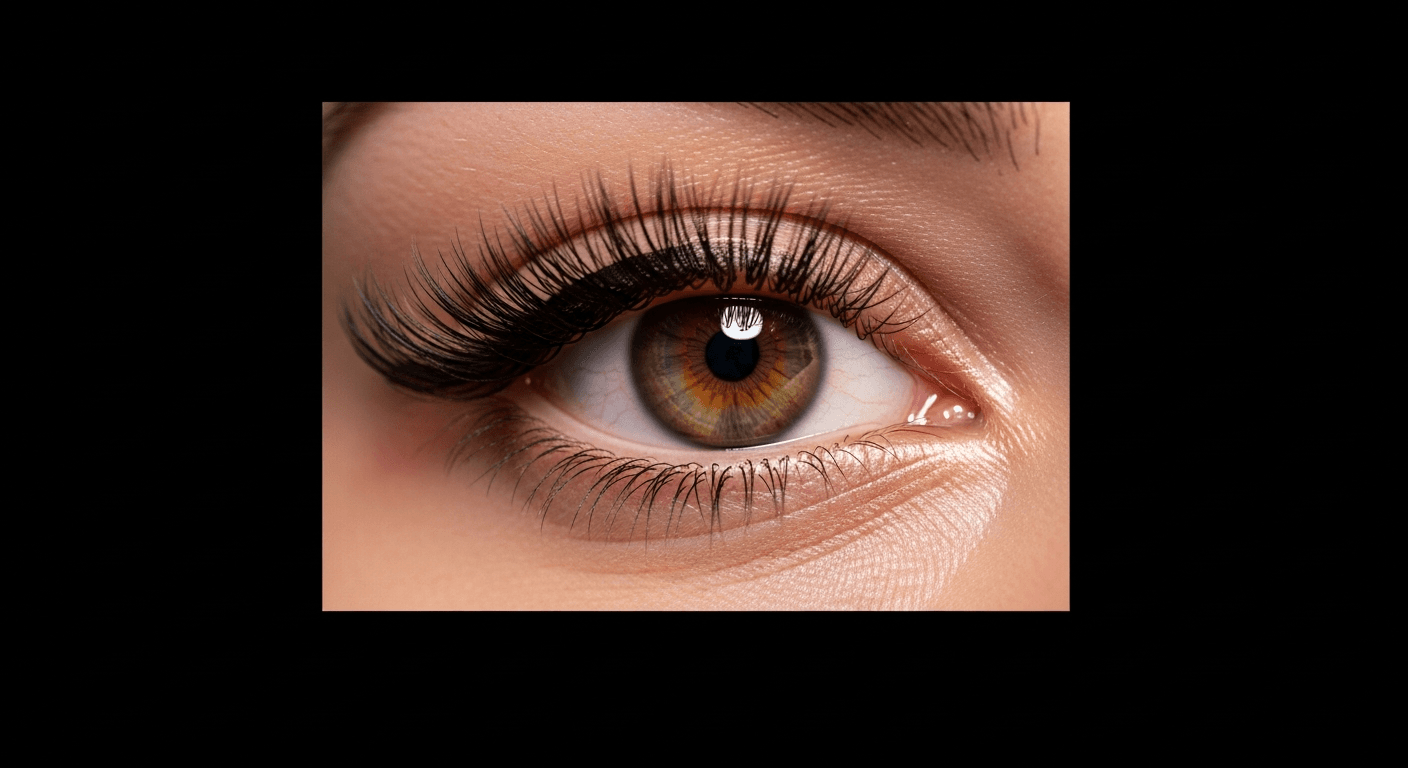
Here’s a number that should stop you mid-scroll: 88.5%. That’s the percentage of lash extension clients who reported dry eye symptoms — itching, tearing, a persistent gritty sensation — in a study presented at the 2026 American Society of Cataract and Refractive Surgery annual meeting. Now here’s the number that makes it strange: 100%. Every single one of those women said she was satisfied with her extensions. Every single one said she’d do it again.
The researchers expected to document a health risk. What they found was a paradox — and a silence. Not one of the symptomatic clients had been counselled by an eye care professional. Most had never mentioned their symptoms to their lash artist. Fifty-eight percent said they’d tolerate ongoing discomfort rather than give up their extensions. The dryness, the itching, the tearing — it had all quietly become the cost of looking the way they wanted to look.
If you’ve noticed irritation after fills and wondered whether a lighter style might help, classic lash extensions are worth exploring — one extension per natural lash, less weight on the lid, less disruption to your blink.
Satisfied, Symptomatic, Silent
The study was small — 49 participants — but the numbers were hard to dismiss. Lash extension users scored 29.9 on the SANDE dry eye assessment scale, compared to 4.4 for non-users. That’s a sevenfold difference on a 100-point scale designed specifically to measure ocular surface discomfort.
What alarmed the research team wasn’t the symptoms. It was the vacuum around them. A companion paper at the same conference flagged chronic blepharitis and meibomian gland dysfunction as common consequences of long-term extension wear — yet ophthalmologists almost never ask patients about cosmetic lash procedures. Optometry researchers have urged their colleagues to proactively screen for lash use. Most still don’t. And on the other side of the chair, lash technicians aren’t trained to screen for pre-existing eye conditions before they pick up the tweezers.
This isn’t a story about extensions being dangerous. It’s a story about a conversation that isn’t happening — on either side of the appointment.
Why Lash Extensions Trigger Dry Eye
Your eyelids do more than blink. Every time they close, tiny glands along the lash line — called meibomian glands — secrete an oil that prevents your tear film from evaporating. That thin oil layer is the invisible barrier between comfortable, hydrated eyes and the scratchy dryness that has you reaching for drops by mid-afternoon.
Extensions can interfere with this system in ways that compound quietly. Extensions placed too close to the lash line can physically compress the meibomian gland openings, throttling oil production at the source. Then there’s weight: a 2024 study in the Journal of Clinical Medicine found that heavier volume fans — the dramatic, high-density styles — have a measurably more detrimental effect on blinking mechanics. Heavier lids don’t close as fully. Less closure means less oil distributed across the eye with each blink.
For anyone living on the prairies, this picture gets sharper. A population-based survey found that 24.7% of Canadian women already experience dry eye disease at baseline — roughly one in four. In Winnipeg, where winter indoor humidity can crater to 15% and summer air conditioning strips moisture all day, a significant portion of lash clients arrive for their appointment with a tear film that’s already under stress. Stacking extensions on top of that is a different calculation here than it is in Vancouver or Miami.
And here’s the part that echoes the ASCRS findings: many of those women don’t even know they have it. Dry eye develops gradually — a little more reliance on drops each month, a little more end-of-day scratchiness — and by the time it’s noticeable, it feels normal. That’s exactly the pattern the study documented: symptoms absorbed, normalised, never discussed.
This is precisely why every LaviLash consultation begins with questions about your eye health — not just your preferred curl and length. The right lash map depends on more than aesthetics when the prairie climate is already working against your tear film.
The Artist Who Asks About Your Eyes
The ASCRS researchers didn’t conclude that people should stop getting extensions. They concluded that the industry needs better education — on both sides of the appointment chair. The gap between 88.5% symptomatic and zero counselled isn’t a health crisis. It’s an education crisis.
A technician trained in ocular health approaches the lash bed differently. Before picking up tweezers, she asks questions most programs don’t teach: does the client use drops regularly? Has she noticed increased redness or dryness? Does she spend eight hours a day staring at a screen — because reduced blinking compounds the same tear film instability extensions can cause? Weight mapping becomes functional, not just aesthetic. For a client flagging any of those factors, that might mean a classic or hybrid set instead of mega volume — a lighter mechanical load that lets the eyelid close fully with each blink.
Placement distance from the lash line gets measured with intention, because even a fraction of a millimetre determines whether those meibomian gland openings stay clear or get compressed. In Winnipeg, the calculation shifts again with the seasons — lighter fans during the dry winter months when the tear film is at its most vulnerable, adjusted aftercare when summer humidity changes the equation.
Aftercare matters more than most clients realise. The skinification approach to lash care that’s reshaping the industry in 2026 centres tear film health in the daily routine — gentle cleansing of the lash line to keep those glands unobstructed, formulations that support the eye’s natural moisture rather than stripping it. Even adhesive technology is evolving, with UV-cured bonds that reduce the chemical exposure known to exacerbate irritation in sensitive eyes.
The 100% satisfaction rate in that ASCRS study isn’t a sign that everything is fine. It’s a sign that people love their lashes so much they’ll absorb real discomfort rather than give them up — which is exactly why the burden of prevention can’t rest on the client. It rests on the artist. The question was never whether to get lash extensions. It was always whether the person applying them understands your eyes as well as she understands aesthetics.
If this has you rethinking your next appointment, book a LaviLash consultation — one that starts with your eye health, not just your look. And if you’re a lash artist who wants to master this level of care, the certification course covers what most training programs skip.

